Maps Driving Directions
Travel & Local

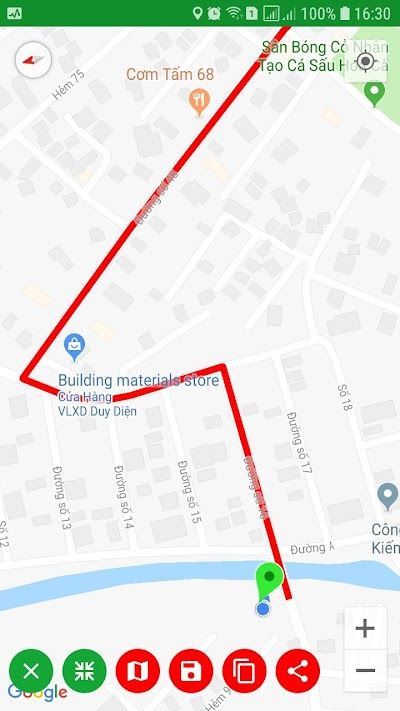
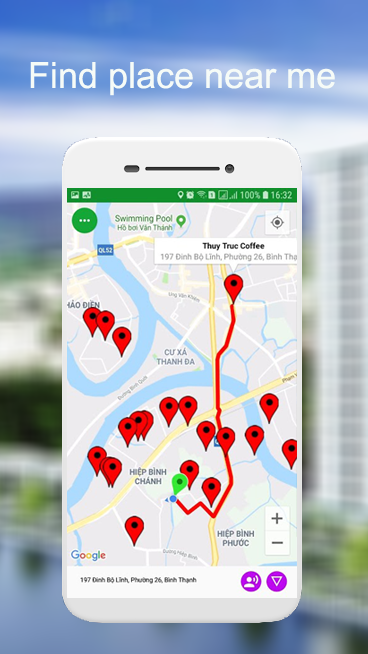
Get The App


Editor's Reviews
The Description of Maps Driving Directions
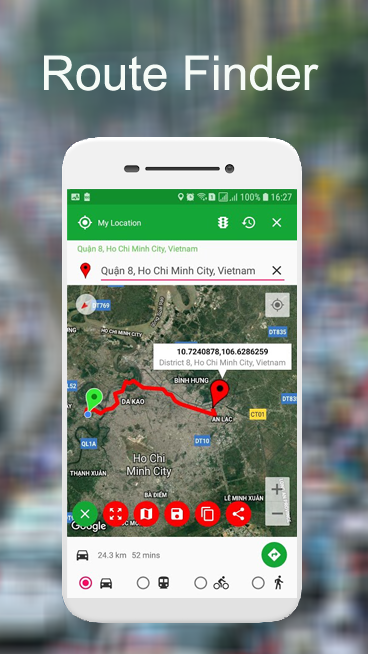
Maps Driving Directions is a navigation tool based on map services, which is widely used in daily travel, travel planning and logistics distribution. This function provides users with detailed driving route guidance by entering the starting point and the end point, and optimizes travel efficiency by combining real-time traffic information.
The basic working principle of Maps Driving Directions includes: locating the user's current or specified location, analyzing the distance, time, road conditions, etc. of different routes, and guiding the user's driving direction on the map by arrows, annotations and voice prompts. In recent years, with the development of artificial intelligence and big data, this function has become more and more intelligent, and can even be dynamically adjusted based on historical travel data, road condition predictions, emergencies, etc.
App Store Performance
Maps Driving Directions apps perform strongly on the App Store, with top apps like Google Maps and Apple Maps consistently ranking high in navigation categories. They receive millions of downloads, boast high user ratings (4.5+ stars), and are praised for accurate directions, real-time traffic updates, and ease of use.
Maps Driving Directions Pros and Cons
Pros:
1. Convenient and efficient
Users only need to enter the departure and destination to get multiple route recommendations, and can choose the best route based on factors such as distance, time, and road conditions, greatly improving travel efficiency.
2. Real-time traffic updates
Maps Driving Directions can combine traffic monitoring systems and user feedback data to reflect traffic congestion, construction road closures, accidents and other information in real time, and adjust routes in time to avoid delays.
3. Voice navigation support
Most navigation systems are equipped with voice navigation function, so drivers can get clear turning, lane change and exit prompts without frequently checking the screen, which improves safety.
4. Multi-mode switching
In addition to driving navigation, many map systems also support route guidance for walking, cycling, public transportation and other modes of travel, providing a full range of travel services.
5. Strong international adaptability
Especially international platforms like Google Maps, which provide support in many countries and regions around the world, are particularly important for cross-border self-driving tours, international logistics and other scenarios.
Cons:
1. Strong dependence on the network
Most map navigation systems need to be connected to the Internet to obtain the latest map data and real-time traffic conditions.
2. High requirements for navigation data accuracy
Once the map data is outdated, it may lead to incorrect navigation, such as entering a prohibited section, taking the wrong exit or entering a one-way street by mistake, which will bring safety hazards.
3. Fast power consumption
Turning on the navigation function usually requires continuous operation of GPS, screen and network modules, which can easily lead to rapid power consumption of the device, especially when driving long distances, it is necessary to equip the vehicle with an onboard charging device.
4. Over-reliance may affect judgment
Some drivers rely too much on navigation prompts and ignore the actual road conditions. They may not react in time in emergencies, or even blindly follow the navigation and enter dangerous areas.
5. Privacy issues
Navigation applications need to continuously track user locations, which poses a potential risk of privacy leakage. Some applications may record user travel habits or location information for advertising or commercial purposes.
Maps Driving Directions Reviews
Maps Driving Directions is an indispensable smart travel tool in modern life. With its advantages of high efficiency, intelligence, and real-time updates, it greatly facilitates people's daily travel and logistics transportation. However, it also has some problems that cannot be ignored, such as dependence on the network and data, privacy risks, etc. Users should remain vigilant when using it, use navigation tools reasonably, and respond flexibly based on actual road conditions to ensure travel safety and efficiency. With the development of technology, future map navigation systems will be more intelligent, personalized and safer, providing more reliable assistance for human travel.
Editor's Reviews
The Description of Maps Driving Directions
Maps Driving Directions is one of the core functions of modern map applications and is widely used in daily commuting, travel, commercial distribution and other fields. Relying on GPS positioning, big data analysis and real-time traffic information, it can quickly generate the best driving route based on the starting and ending points entered by the user, and provide real-time guidance to the driver through voice, graphics and text.
App Store Performance
Maps Driving Directions apps perform strongly on the App Store, with top apps like Google Maps and Apple Maps consistently ranking high in navigation categories. They receive millions of downloads, boast high user ratings (4.5+ stars), and are praised for accurate directions, real-time traffic updates, and ease of use.
Maps Driving Directions Pros and Cons
Pros:
1. Efficient and accurate route planning
Maps Driving Directions uses powerful algorithms to analyze multiple feasible paths between the user's starting point and end point, and dynamically adjusts according to real-time road conditions (such as congestion, accidents, and construction) to help users save time, reduce fuel consumption, and improve travel efficiency.
2. Real-time traffic information
This function supports displaying traffic lights, traffic congestion, accident warnings, speed limit information, etc., which can help drivers make timely route adjustments to avoid getting stuck in congestion or entering restricted areas.
3. Voice navigation improves driving safety
Most navigation systems provide clear voice prompts to help drivers accurately grasp the next action without distraction, such as "turn right after 500 meters" and "drive on the left", etc., to improve driving safety.
4. Multi-mode navigation switching
In addition to private car navigation, map navigation systems usually also provide different modes such as walking, cycling, public transportation, and trucks to meet the needs of different user groups and travel scenarios.
5. Both internationalization and localization
International platforms such as Google Maps can provide cross-border navigation services, which are suitable for overseas travel or cross-border transportation; while local maps such as Gaode and Baidu update domestic road conditions more timely and detailed, providing services that are closer to local needs.
Cons:
1. Strong reliance on network and GPS signals
The map navigation function is highly dependent on a stable network and accurate GPS signals. In places with poor network coverage or weak signals such as mountainous areas, tunnels, and remote areas, navigation may not work accurately, affecting travel efficiency.
2. Map data may be delayed or wrong
If the map data is not updated in time, there may be problems such as inaccurate routes, failure to identify new roads, and wrong guidance into prohibited areas, causing trouble or even safety hazards.
Maps Driving Directions Reviews
Maps Driving Directions has become an indispensable tool for modern urban transportation and personal travel. It not only improves travel efficiency and reduces driving risks, but also improves the efficiency of urban road use, especially during peak hours and holidays. For ordinary users, it simplifies travel plans, avoids getting lost and unnecessary time waste; for commercial users such as logistics companies, it optimizes delivery routes, improves service timeliness and customer satisfaction.
Although navigation technology still has certain limitations, such as dependence on networks and data, insufficient privacy protection, etc., with the popularization of 5G networks, the development of artificial intelligence, and the widespread deployment of high-definition maps and vehicle-road cooperative systems, these problems are expected to be effectively solved.
In the future, Maps Driving Directions will develop in a more intelligent, precise and humanized direction. For example, it can realize navigation operations without human intervention in combination with autonomous driving systems; predict road conditions in the next few hours through large model algorithms; and recommend the most "comfortable" routes based on weather, road conditions, and driving habits. These innovations will further promote the development of smart travel and have a profound impact on the global transportation system.
More App